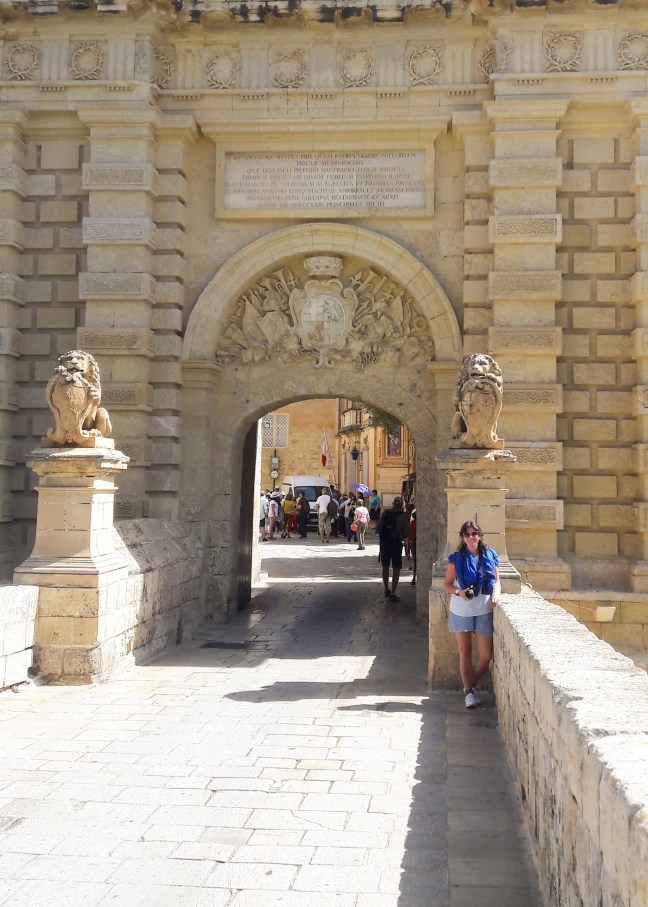
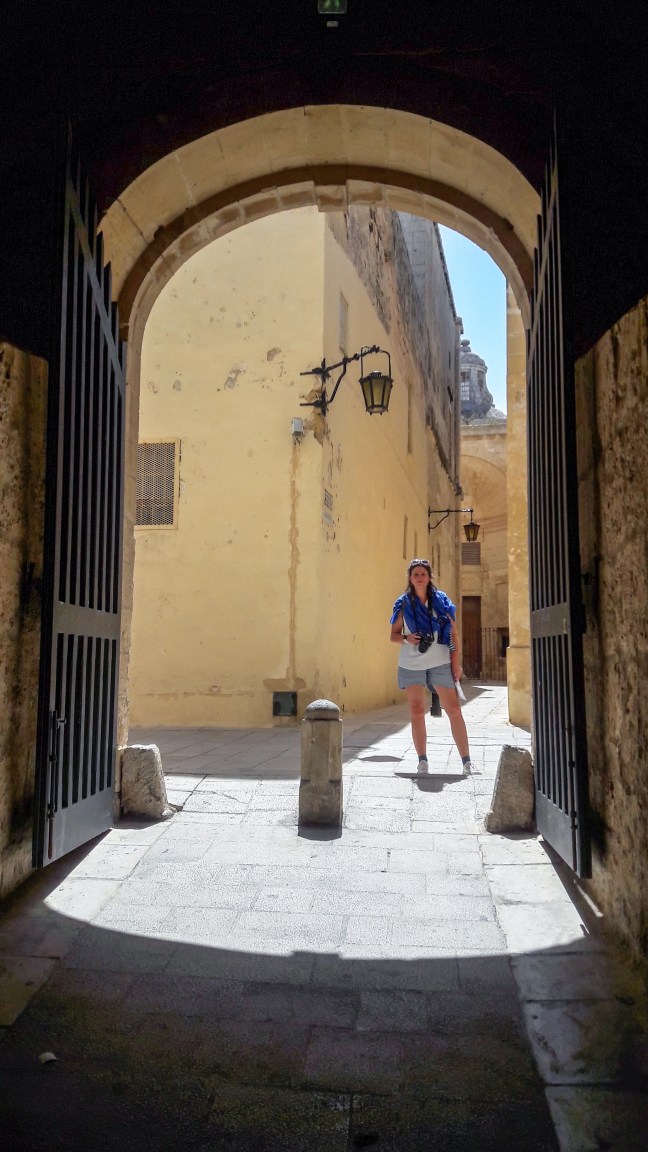
On day three of our recent Valletta trip we decided to visit the ancient walled city Mdina (m-dee-na). It is Malta’s former capital and lies high on terraced fields, dominating the island’s surrounding skyline. If you feel some ‘Game of Thrones’ vibes upon entering through city gate, that’s because the gate and other locations featured in season one of the popular series…welcome to King’s Landing…
In the GoT series Mdina city gate represents one of the entraces of King’s Landing.
Mdina City Gate
Mdina is easily accessible by bus and the ride takes about half an hour, depending on traffic, dropping you off at the garden opposite the entrance gate.
Through course of history Mdina went by different other names: it was founded ‘Maleth’ by the Phoenicians and renamed ‘Melite’ by the Romans after the honey the island was famous for. Under rule of the knights of Order of St John activities switched to the newly built Valletta and Mdina therefore lost its capital status.
The current and still used name is derived from the Arab word ‘medina’, though it also goes by its nickname ‘The Silent City’ and ‘Citta’ Notabile’, with the latter probably the most accurate to this date: the noble families that once lived within city walls are replaced by about 300 noble and lucky inhabitants with security cameras closely monitoring the entering cars and their drivers.
St-Pauls Cathedral is a baroque church dedicated to apostle Paul. Under each bell tower is a clock: the right one being a normal one telling time, the left one showing date and month, though legend says the two clocks were to confuse the devil. The church was destroyed during the Sicilian earthquake of 1693 and had to be rebuilt completely.
Meanwhile some mingling with the locals…
Another GoT filming location, Littlefinger’s brothel…
No walled city nowadays without souvenir shops…Mdina is famous for its glass, used in jewelry and deco items…
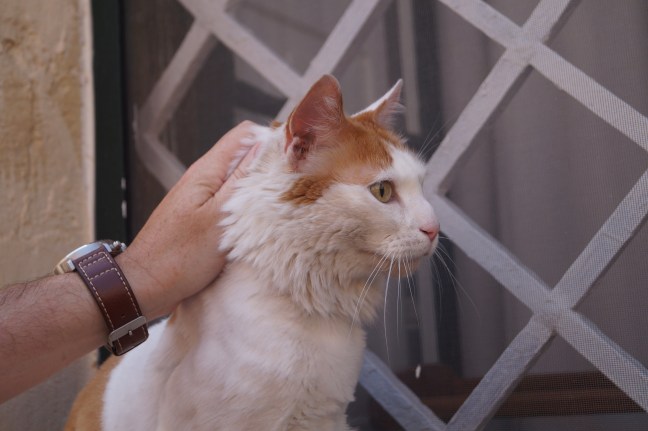
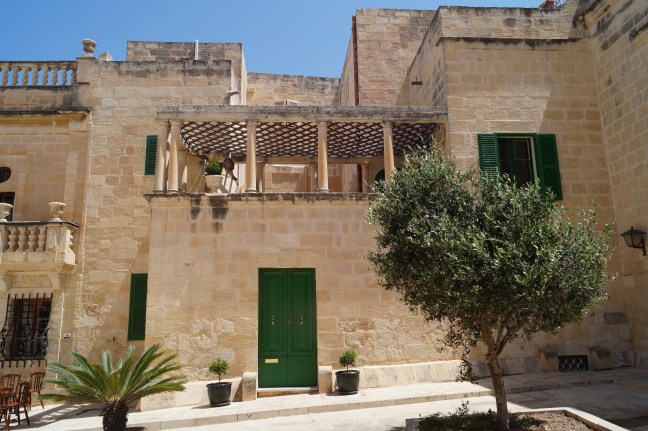
We had lunch at Trattoria 1530, part of the Xara Palace Relais&Chateaux hotel and located in one Mdina’s lovely picturesque squares…by the way, can you spot our little lunch companion?
can you spot our little lunch companion?
re-fueled we again hit the winding and narrow streets…
sun makes an excellent artist drawing shadow lines on the walls
sun makes an excellent artist drawing shadow lines on the walls
Mdina tears…
Charming Mdina is rightfully on UNESCO’s World Heritage tentatives (the waiting) list.
Join me next time for the final part in this Valletta-series where I’ll take you around a fun ‘Three Cities’ tour.
2018 stands for feast in overdrive in Valletta, capital of Malta, as the entire year it proudly wears the crown of ‘Culture Capital of Europe’. If you haven’t put it on your travel radar yet, now’s the time to adjust your antennas! With 320 monuments all within an area of 55ha that makes this compact capital one of the most concentrated historic areas in the world, and if UNESCO says so…
We explored this charming and picture-perfect city early June and we were completely under its spell from day one… join us, that’s the husband and me, on this little photo stroll through Valletta’s streets…
…though not winding…no, the city centre handles a uniform grid pattern and orientation is therefore easy. First things first though: we flew in from Brussels South with Ryanair and stayed in an Airbnb located in Cospicua/Bormla, one of the so-called ‘Three Cities’. We had a lovely trip to Mdina and an extensive fun tour of ‘The Three Cities’ which I’ll tell you more about in the next posts.
Our Airbnb in Cospicua/Bormla
but let’s focus on Valletta first…
Malta’s history is forever linked to the Order of the Knights of Saint John of Jerusalem but to fully understand the capital’s and island’s current mix of styles and influences we need to step back much further in time for a (very brief, I promise) history lesson…
In chronological order the island was invaded by the Phoenicians, the Greeks, the Carthaginians, then came the Romans, the Byzantines, the Arabs, the Norman, the Sicilians, the French and Spanish…are you still with me? Then, in 1530 the Knight Order arrived (more on that later) with years of glory and fall, followed again by a, this time very short, French rule; after them the British took over for many years. During WW2 the city suffered extremely heavy losses and bombings and then, fi-nally Malta gained independency in 1964…and if you would think all these influences would result in a mishmash of styles, think again…it all blends perfectly well to a, to this date, modern vibrant town that fully embraces its cultural heritage.
The island thanks it name to the Phoenicians, who called it Maleth, which means shelter. The Maltese language, still spoken, found its origin in Arabic and the capital was named after Jean Parisol de la Vallette, Grandmaster of the Knight Order and also the one who commissioned the building of the new city capital. You can have coffee full Italian Style and a Mediterrenean afternoon siesta oh and driving left and tea and biscuits stuck around too 😉
Queen Victoria forever wrapped in Maltese lace on Republic Street
How exactly did those knights end up in Malta? When they were thrown out of Israel by the Muslims, they first ended up in Rhodes until they had to flee from there too. The Spanish king gave them Malta to make their home, which they did. Years of glory followed, with fortifications being built, coming out victoriously out of the Grand Siege and Turkish attacks and the building of a brand new capital and more defence structures. All that building and defending against enemy invasions cost a lot of money though and by then some of the knights of the Order had a certain decadent lifestyle they didn’t want to give up, scandals followed and hence the fall of the Order.
Enough talking, time for photos now 😉
Staying in the Three Cities meant our daily trip to the city centre included the inner harbour crossing by ferry (fun) or typical dhasja (much more fun).
View on docking area and elevator to Barrakka Gardens coming from Three Cities
Stepping off the boat and heading left brings you to the elevator (your feet and back will thank you) going high up to ‘Upper Barrakka Gardens’. This is a ‘must do’ to see and be seen: you can admire the phenomenal view on the Grand Harbour, watch the canon firings at 12 and 16pm, feed the pigeons, have a snack and drinks, people-watch or just rest and absorb those holiday vibes.
These gardens were installed on the upper of the St Peter & Paul bastion, originally as place of recreation for the Italian knights of the Order. On the lower tier you can find the saluting battery.
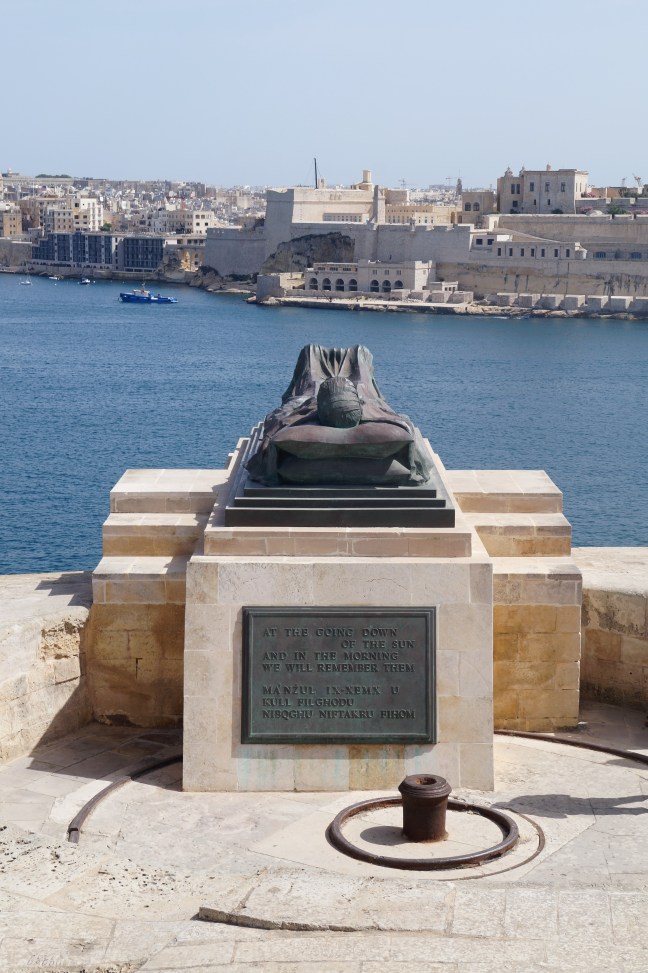
Salute at 12h and 16h
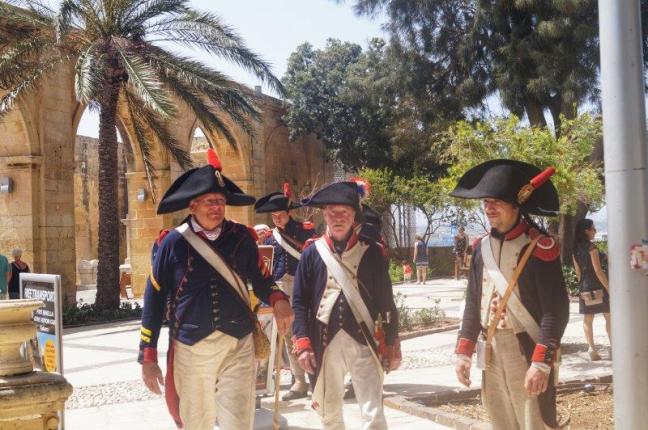
Some odd feathers could be spotted during our stay – part of an historical re-enactment group
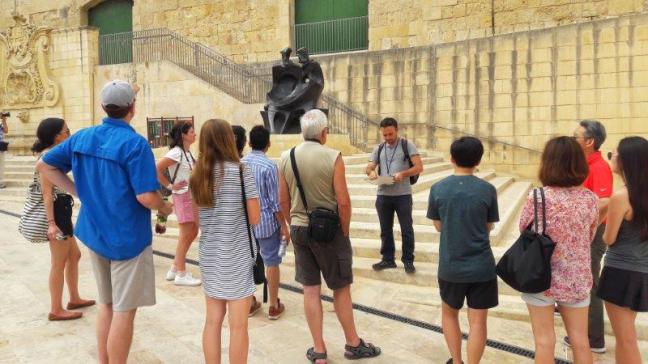
From Barrakka Gardens on you can start exploring the city at your own pace or if you appreciate some extra historical and cultural info, join one of the many guided tours. We joined a ‘Colour my Travel’ tour taking us on a three hour walk through the city centre.
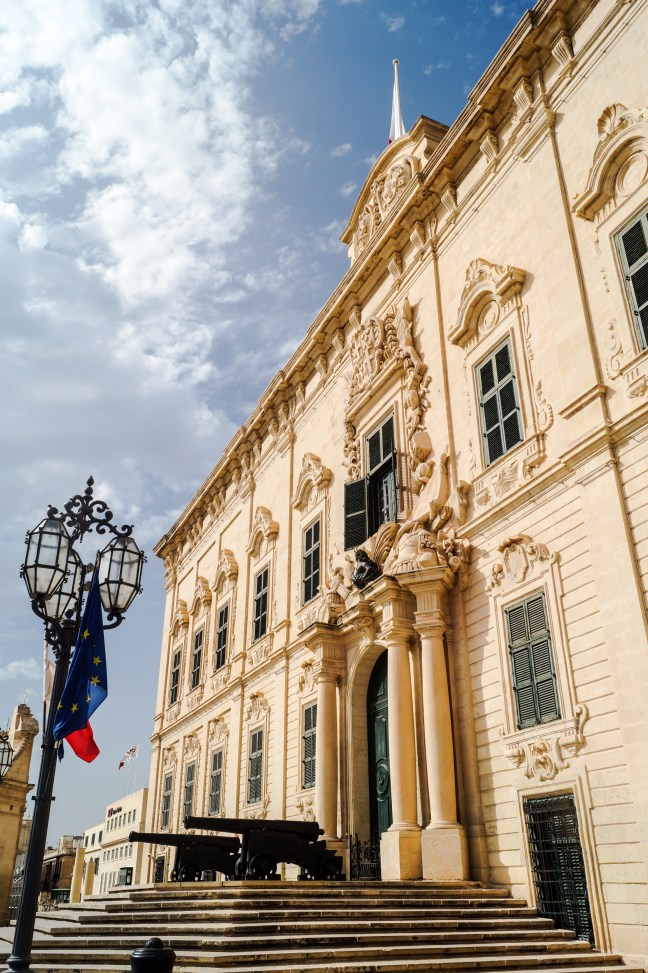
Colour My Travel city tourAuberge de Castille Valletta
Covered Food Market
The Lady of Victories chapel is built on the exact spot the very first stone was laid when building the city of Valletta.
A definite must see is Saint John’s co cathedral, built in only five years time. The interior decorating took much longer and if you step inside you’ll immediately understand why as there’s not a blank inch in the cathedral left. Paintings, floor marble stones, tapistries, sculptures, crypt, you name it and you’ll defintely find it inside! The decorations on the walls were all paid for by two Cottoner brothers, Raphael Cottoner and Nicholas Cottoner. They were both grand-masters and you can find their monograms RC and NC on the walls. St John’s Co Cathedral has 375 graves. Their gravestones, all in marble, show the knights and grand-masters that are buried inside this cathedral. The oratory is also of great interest and do expect some crowds when visiting, all admiring one of Caravaggio’s masterpieces and the only work signed by him ‘The Beheading of St John the Baptist’.
Rabbit and roasted veg at La Pira, typical Maltese kitchen
when local, drink local
Merchant St, Republic St and Old Bakery St all lead to Fort St Elmo, the crossing streets will either lead you to Sliema Ferry landing area or Upper and Lower Barraka Gardens. Do not miss out on those Lower Gardens as they equally guarantee a phenomenal view.
Monument Lower Barrakka Gardens
detail of view from Lower Barrakka Gardens
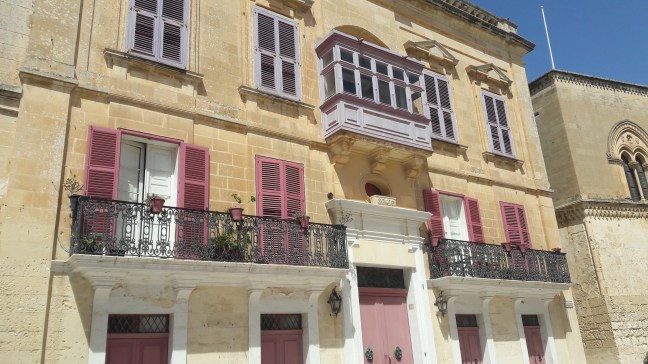
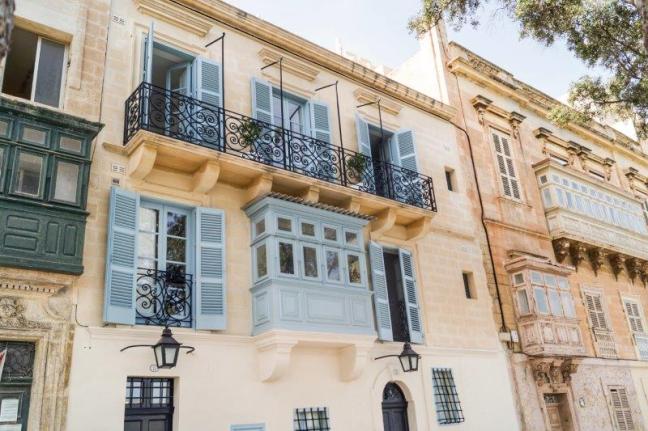
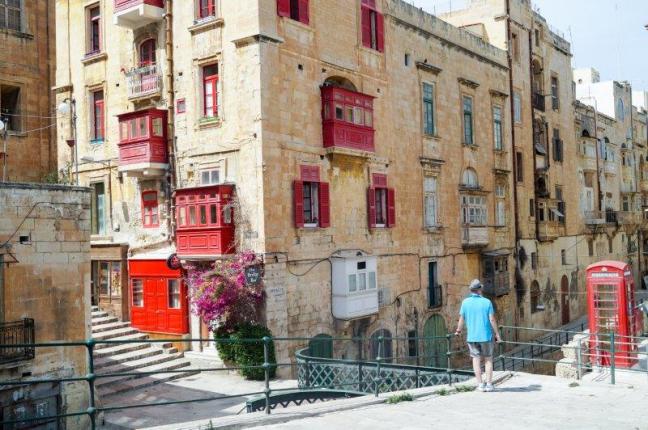
Even on colourful eye-catcher and cities’ trademark, the famous balconies, the mixed cultural influences left their mark. There still, apparently, is some discussion whether Arabic or Spanish origins. Most probably it comes from Arabic times when women had to stay out of sight and this got translated to Maltese way over time, with housewives watching the world go by from above and with little side-windows to gossip with/about the neighbours (?)
Een bijschrift invoeren
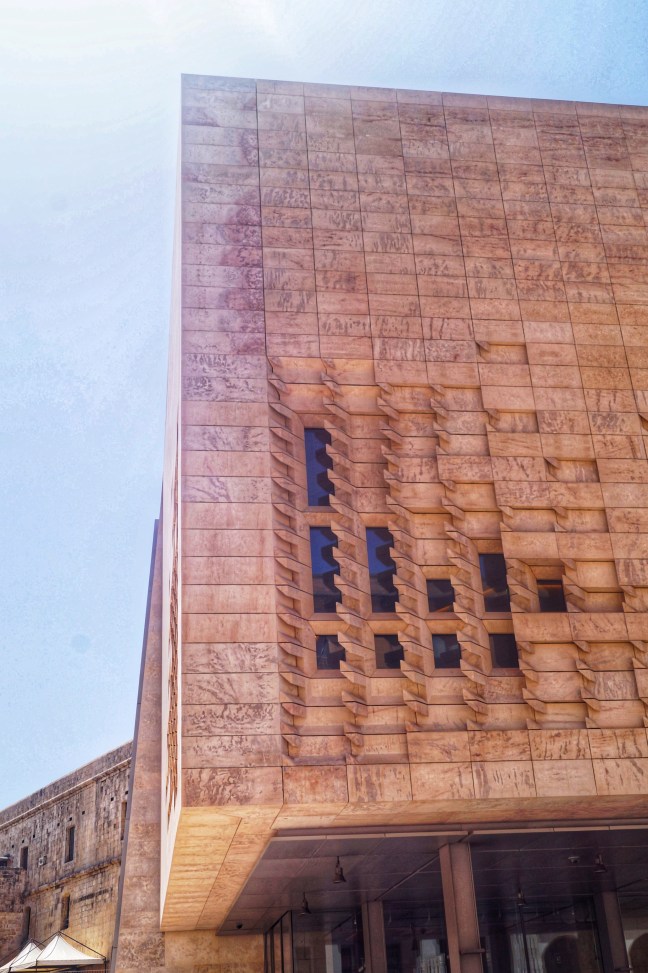
By now you probably think there are only old stones to walk on in this capital…meet Valletta 2.0…
The above photo is part of the Parliament House and architect Renzo Piano’s (the one of the Shard in London) so-called ‘City Gate Project’, a masterplan to restyle the old City Gate area. He made some very drastic changes, as the old gate in no longer an actual gate but a V-shaped entrance and citizens had to grow accustomed to this new style. However, to my opinion he succeeded wonderfully wel in marrying old and new. The stone slabs in the limestone are carved out this way to copy natural erosion by nature.
open-air theatre
Have I convinced YOU that Valletta is worth a visit? Then start planning your trip and check the cities’ tourist site and 2018 cultural highlights!
Next post in this series will highlight the Three Cities and Mdina, stay tuned 😉
Don’t shoot me but I’m not a musea person, no matter the subject…can’t help it…However, I know what I like and don’t like: I like admiring buildings and can appreciate architecture whether modern or historical, I like colours and patterns, texture and there has to be that wild card that ignites the fantasy. Pull the objects out of a building, place them in nature or outside somewhere and you’ll have my attention.
Our recent trip to Ostend, Queen of Belgian seaside resorts, rewarded us with ‘open-fresh (though my husband persisted ‘cold’) air’ artworks to admire when strolling through town.
Beaufort is a triennial art project that extends along the entire Belgian coastline covering 15 resorts each having their own identity. It is a project that was first launched in 2003 in which the sea very often plays the main role. Furthermore every participating artist comes from a country that borders on the sea.
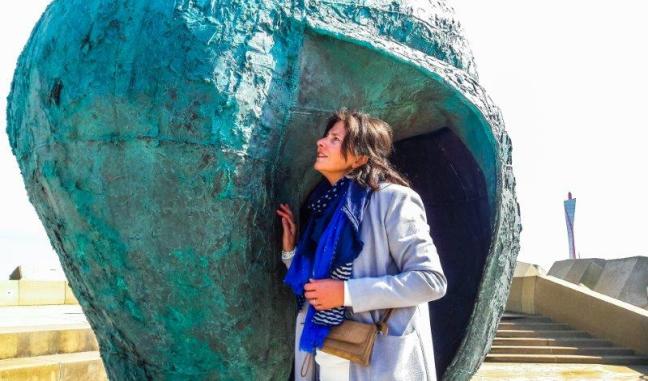
In Ostend there are three different Beaufort-artworks to discover however during our walk on the western strekdam we stumbled onto the Monument for a Wullok by Stief Desmet. A wullok always holds some kind a magic and as a kid holding it to your ear, thinking you could hear the sea and what lied beyond…wow…however some things stay secret and magical, reason for the artist to return the bronze sculpture to the sea and let time, the salty air and sand transform it.
Together with the Beaufort art project Ostend is also home to the Crystal Ship open-air art exhibition. An international group of visual artists (more than 50) transform existing structures with their creative interventions and murals. In this concept of ‘public street art festival’ it is the largest one in Europe!
This visit our eye fell on the works of Telmo&Miel at Nieuwpoortsesteenweg.
Even without big events or festivals like these, Belgian seaside always has something to offer to please the eye if you would ever get bored of wave or people watching…
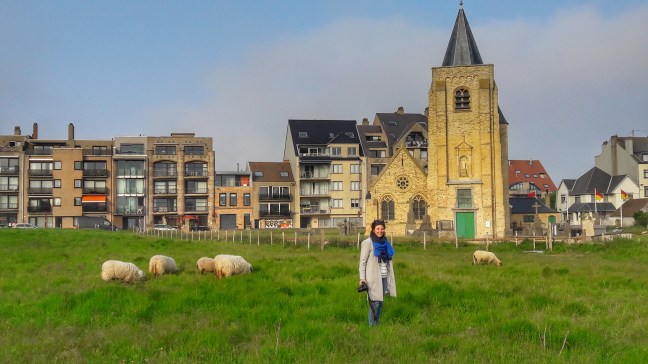
The picturesque ‘Duinenkerkje’ at Mariakerke/Ostend is the final rest place for painter Ensor where he lies peacefully…altough…surrounded by lively sheep and a colourful rabbit…
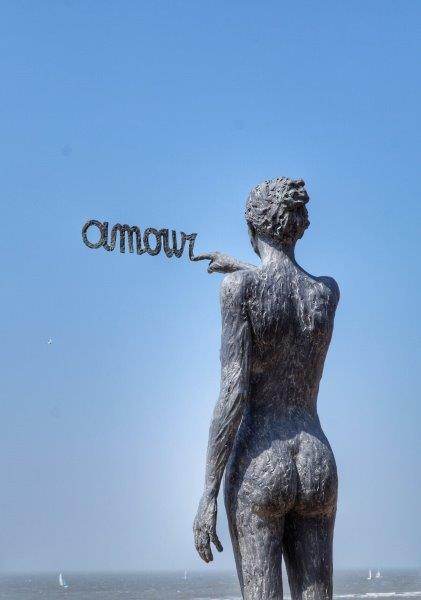
And in neighbouring De Haan some beautiful romantic sculptures keep you company on your evening walk…
For whatever we lose (like a you or a me) it’s always ourselves we find in the sea
One month ago one of March’s beautiful spring weekends led us to Belgian Voer-region and Dutch city Maastricht. A perfect combination: countryside and city, best of both worlds…You could already read all about our discoveries in Voer here Welcome in the Voer region…but I still owed you some Maastricht tales and photos…
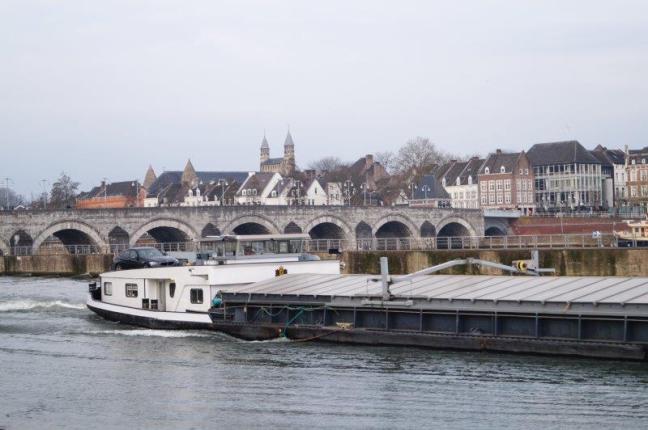
Maastricht lies at the crossroads of the three countries that together make up the Euregion Meuse-Rhine with ‘Maas’tricht itself lies at river Meuse.
We stayed in Townhouse Hotel located in Wyck-district near city station and it offers warm hospitality and coziness in a modern decor.
A very special thanks to the hotel helpful hotel staff as during our stay my husband got sick and we were forced to stay longer…not a punishment for me, but sadly no romantic weekend as he experienced most of Maastricht out of his room😟
Mainly just me therefore exploring the city, so do keep me company and join me on this little stroll!
Maastricht is often described as one of the most romantic cities of the Netherlands offering a wonderful variety with quaint historical districts, art, history, culture, gastronomy and calm green surroundings. What’s not to like?
say cheeeeese
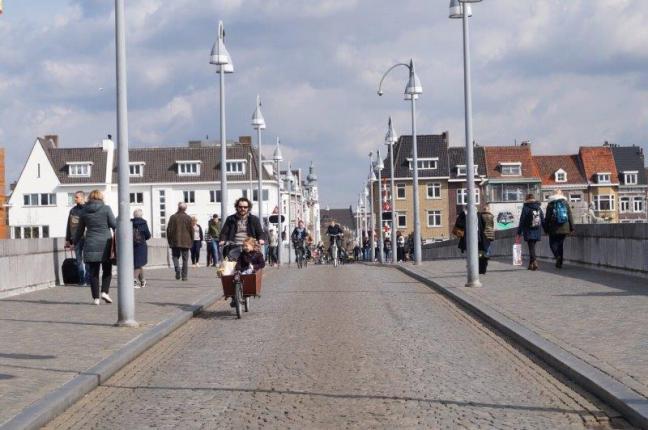
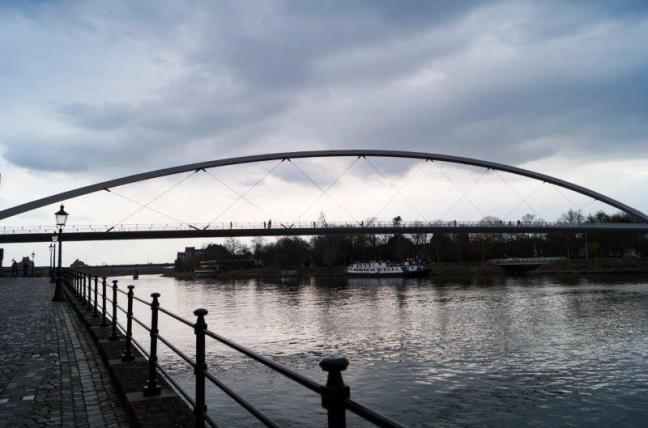
The Wyck-district, where we were staying is linked with Maastricht’s city centre through the ‘Sint-Servaasbrug’ and is therefore frequently used by pedestrians and cyclists.
view towards Wyck-districtand crossing to the other side, direction city centre
If your mind is set on shopping, Maastricht definitely is the right place: hip and vintage in Wyck, multi-brand shopping centers Mosae Forum and Entre Deux in city centre and the more posh boutiques in ‘Stokstaartkwartier’ ánd always open on Sundays!
Paradis de Clayre
Wanderlust in Wyck
Bizoe
royal warrant holder, delicious coffees and teas
Wanderlust Wyck
Maison de Clayre
wooden robot and other toys and gifts in Wanderlust, Wyck
Entre Deux shopping centre
Shopping makes hungry, right?!
‘t Wycker Cabinet
Maastricht houses one of Holland’s most unique bookstores, being located in a former church ‘Boekhandel Dominicanen’ offers an enormous collection of books with a view, oh and yummy coffee and sweets in the inside shop!
book store Dominicanen
up, up, look up!
City hall
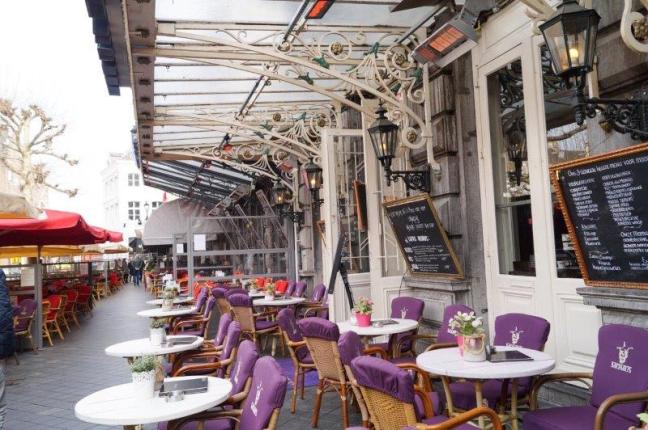
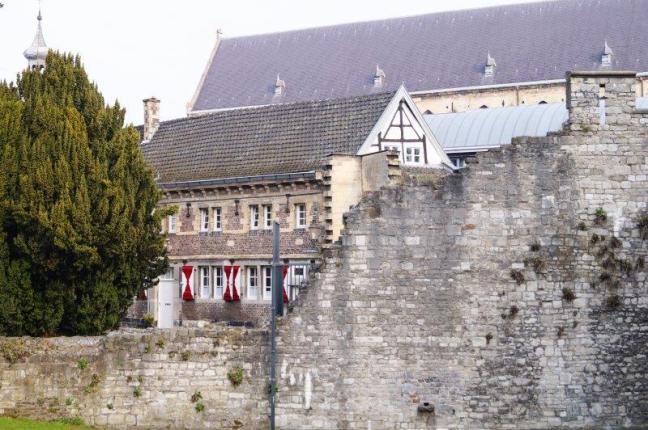
Maastricht is also one of the oldest cities of Holland: Saint Peter’s caves and fortress, the casemates, stone wall…all still prominent witnesses of Maastricht’s prominent place in history. One place in particular that you just have to visit when inside city centre is ‘het Vrijthof’. This large square has attracted people since medieval times when pilgrims came to see the grave of Saint Servatius, lying in the Basilica carrying his name. These days, Vrijthof is also known for its many outdoor cafés and frequent events.
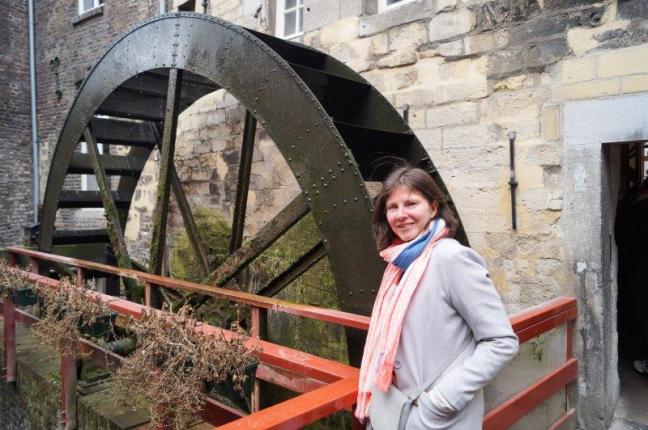
At ‘De Bisschopsmolen’, a bakery in a restored watermill, they are justly proud of their craftmanship and working with natural products and simple processes.
After visiting the mill, do take a further stroll in the Jeker-district, Jeker being a small stream, flowing into the Maas here in the city. Explore Helpoort, the oldest surviving city gate in the Netherlands, and the characterful surrounding streets.
…once a political and linguistic battleground, now every wanderer’s, cyclist’s and nature lover’s dream! This rural region is situated in the far eastern part of Belgium, in province Limburg, and consists of six small villages* lying at a stone’s throw from the Belgian-Dutch border yet still close to major cities as Liège, Aachen and Maastricht. Its location nearby rivers Rhine and Meuse, the landscape and soil have always attracted many to exploit: the Romans did, even traces back to prehistoric times can be found…Over the years however nature, the unique character, position and its advantages rightfully took the upper hand for this region…who cares which language is spoken when there is so much to enjoy and discover…
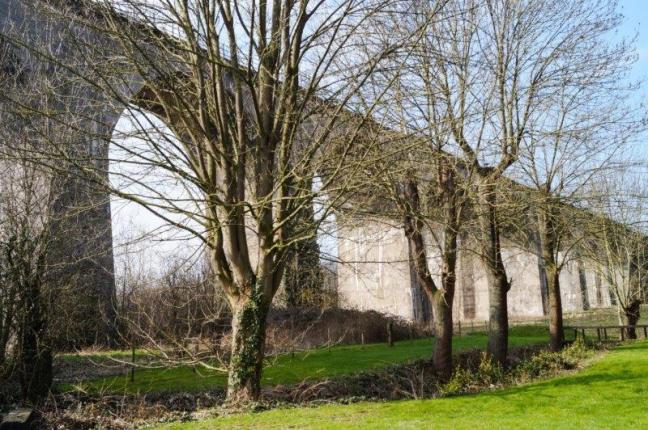
St-Martens-Voeren is dominated by the tall ( 23 metres) railway bridge. It is part of the rail connection Tongeren-Aken, mainly used for freight transport and was built by the Germans in World War I.
As in most of these tiny villages, the church building dominates and in this case also the starting point of hiking route ‘de Bronnenwandeling’ which was chosen most beautiful hiking trail in Flanders in 2012.
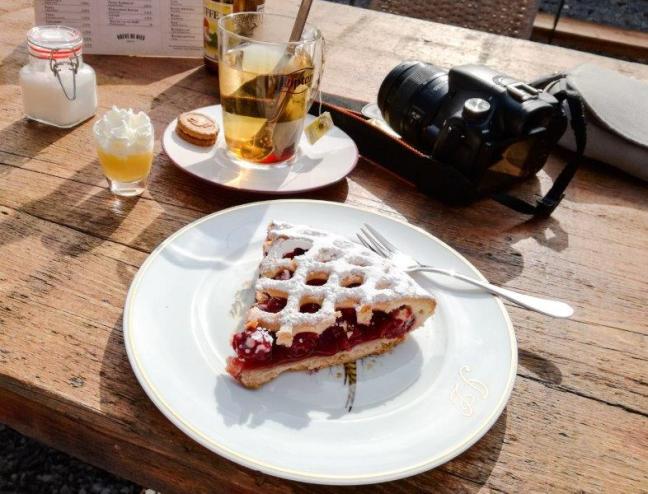
No exploring on an empty stomach though, Hoeve de Bies is ideal for any short or longer hungry break and when in Limburg of course, the typical ‘Limburgse vlaai’ is all around…resistance is futile!
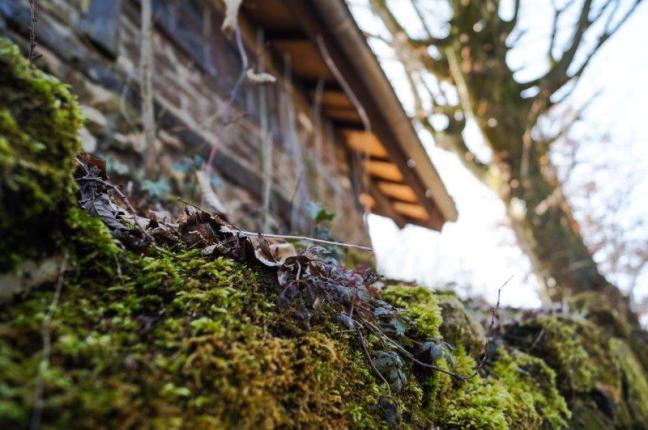
It was the tiny hamlet of Veurs (Sint-Martens-Voeren) that stunned us most during our little trip. This particular area is known for its concentration of typical timber frame houses. It is home to some extraordinary fauna and flora, mixes tree orchards and small forests and it’s oh so quiet…big like!
Sint-Pieters-Voeren is the smallest of the six ‘Voer-villages’, with fewer than 300 inhabitants, and best-known for its Commanderie. This castle belonged to the German Knights Templar until the French revolution. The current building was constructed in the beginning of the 17th century in the so-called ‘Meuse-region Renaissance-style’.
In the park of the castle lies the spring that provides the ponds and the Voer river with water at a ratio of some 3000 litres per minute. In these surrounding ponds trout and sturgeon are bred which is a true delicacy and is on the menu at the local on-site brasserie and many of the local restaurants.
We had our feet up and enjoyed a lovely little ham and cheese snack at Gasterij de Commanderie opposite the castle.
Perfect way to end this little pre-Spring ‘tourist in own country’ trip and look back on the lovely landscapes and walking routes we discovered along the way. This definitely tastes for more, litterally, as there are some outstanding winehouses in this region as is the nearby abbey of Val-Dieu and its beer of the same name, needless to say we’ll be back!
Next post I’ll take you along to Maastricht, just over the Belgian-Dutch border and easily to combine with a Voerstreek visit!
Ingrid
xxx
(*) Moelingen, ‘s-Gravenvoeren, Sint-Martens-Voeren, Sint-Pieters-Voeren, Teuven and Remersdaal
In the Lisbon series there is one more ‘must see’ I want to tell you about, or not…maybe Sintra should be kept more secret as it is already overrun by tourists all coming to admire the city’s cultural and architectural wonders. Its natural and historical value make Sintra in its whole a UNESCO World Heritage Site, like I said, a ‘must see’…
Sintra is located 25 km outside Lisbon city centre and is set against the lush pine-covered hills of the Serra de Sintra. Easily accessible from Lisbon Rossio train station in about 40 minutes and included if you have a Lisboa card.
Upon arrival shuttle services await you to bring you to all the main sites, however we chose to walk to the village centre. An easy walkable path offering views on the National Palace with the characteristic chimneys, colourful stands with local handicrafts and an iron throne, well, with a little imagination…
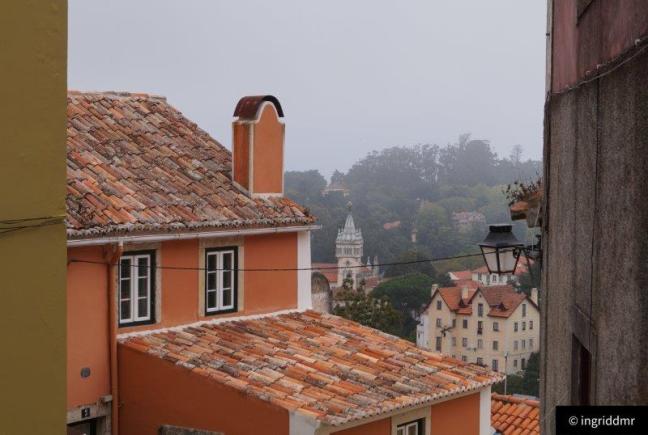
Early mornings can be foggy in Sintra, don’t worry, sunny ‘sol’ does her best and by noon you’ll have clear blue sky!
In the above picture, all the way up, op top of the foggy hills, are the ruins of the moorish castle. We’ll get to them later…
view on Sintra city hall
First stop for us however was Pena Palace and its gardens. From the city centre we took a tuk tuk that dropped us off at Parque da Pena entrance and from there we made our way up to the Palace, still a serious climb on often cobbled paths!
Some piece of advice…if you are not interested in castle interiors you do not have to get in line, which can be a very, very long queue…the exterior grounds are perfectly accessible with your entrance ticket without waiting in line or just ask for the cheaper park/outside combination…wish someone had told us that upfront, it certainly wasn’t mentioned at the ticket office…though would have saved us a lot of time! And yes, some of the terraces are only accessible from the inside, however is it worth an hour and a half queuing? That is up to you to decide…
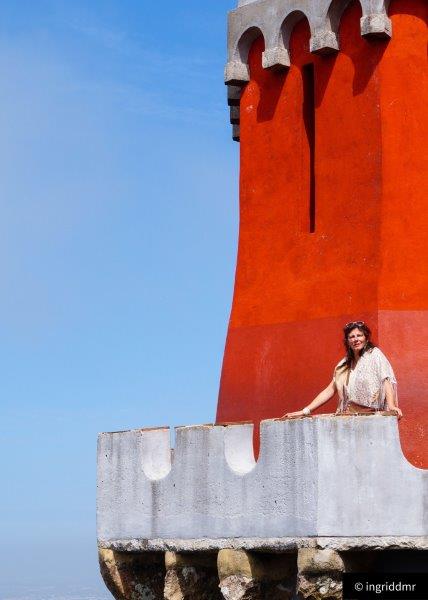
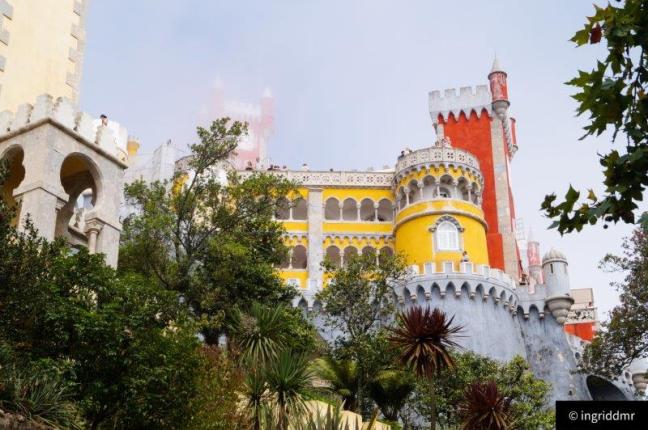
The palace is a dazzling piece of extravagant and astonishing architecture, where technicolor meets mythology and of course, being in Portugal, tiles are never far away! Not that it was always like that…the hilltop used to be home for a monastery. After the abolition of religious orders in Portugal it was abandoned and King Ferdinand II acquired the grounds in a public auction. So the story goes he was a bit jealous of Neuschwanstein castle in Bavaria and commisioned Baron von Eschwege to build him his own dream palace opera-inspired (he later marries opera singer Elise Hensler) and saw to a forestry landscaped garden to hide away in. I’d say mission accomplished!
newest hairstyle
colourful Palace residents…
some welcome shade in the palace surrounding gardens
Meanwhile in city centre…
I promised blue skies, didn’t I? Fog has cleared and you can see them now…next stop, the moorish walls…
The Castelo dos Mouros was established during the 9th century by the North African Moors to guard the town of Sintra however archeological excavations and studies of the artefacts around 1995 even traced back occupation of the castle slopes to 5000 B.C. by neolithic communities…this place breathes history! In the 19th century King Ferdinand II acquired the castle that had become a ruin by then and converted it into the romantic style of that century through exuberant planting and reconstruction though keeping a certain medieval ruin charm.
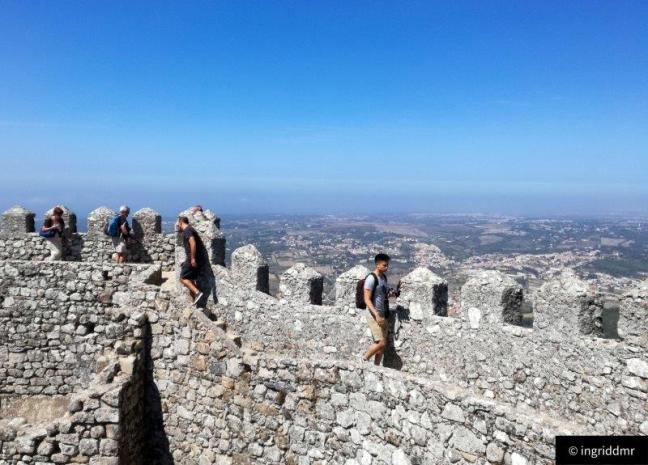
Not sure if I would recommend to climb the longer part of the walls with very small children or if you are afraid of heights…the passage is sometimes narrow and there is not always a safety railing…
‘smaller part’ of the walk
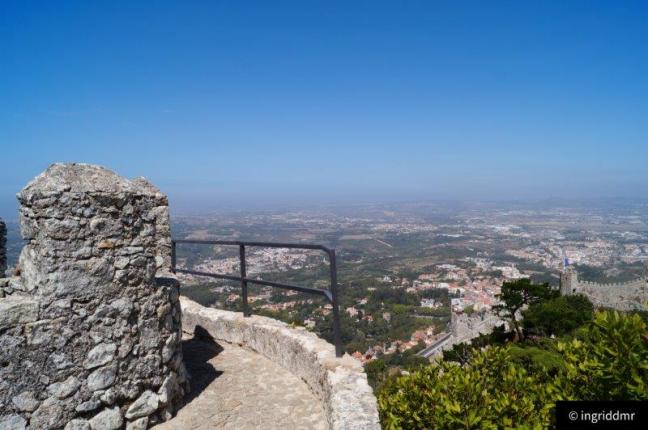
The ruin walls offer phenomenal views on Sintra and its surroundings, however, like I said, watch your step, as not everywhere a railing…
Sintra City Centre shot from the moorish walls
Tired feet and back, hence the tuk tuk back to village…smooth ride and friendly helpful driver, were all I needed to recover and smile again!
There’s plenty more to see in Sintra, in fact, if you want to explore thoroughly and at ease, it’s probably best to spend the night, more ‘must see’ attractions are the Quinta Regaleira, Palácio de Monserrate, Palácio Nacional de Sintra, Convento dos Capuchos,… just check the local tourist office website or office.
One of Lisbon’s many jewels, Belém lies peacefully, well if you ignore the tourists, alongside Tagus river…how different it must have been during the Age of Discovery with explorers impatiently embarking onto their long voyages to unknown destinations and adventures, and with it the booming trade bringing the world to Belém…
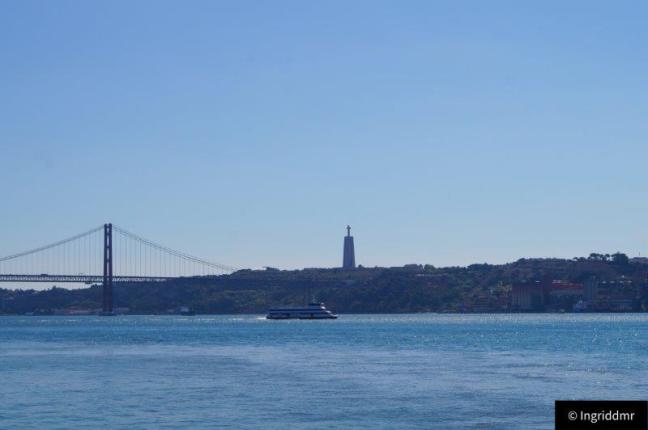
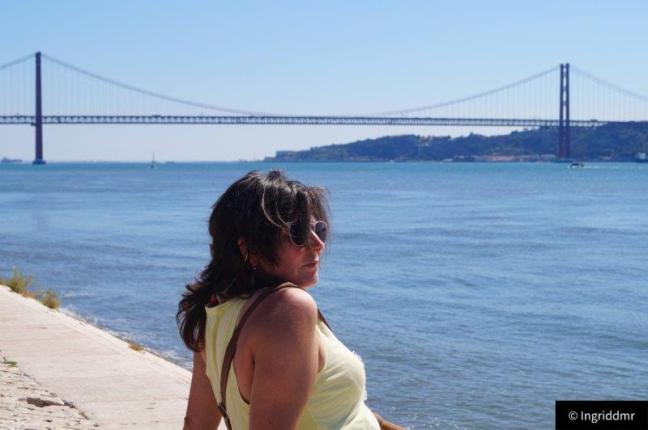
Tagus, Bridge and Cristo Rei statue
No exploring on an empty stomach…skipping this bakery and their well-known pastéis would be a capital crime! Pastéis de nata exist all over the world, only these ones, manufactured following an old, and till today, secret recipe from the monastery can be called ‘pastéis de Belém’…did you know that according to Portugese tradition a bride who eats a pastéis will never take off her ring?!
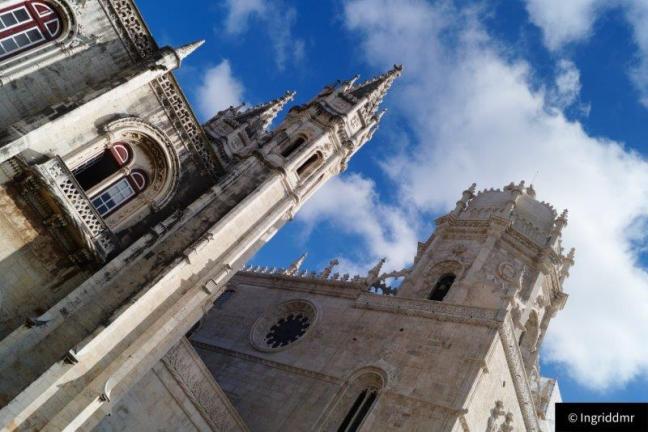
Mosteiro dos Jeronimos
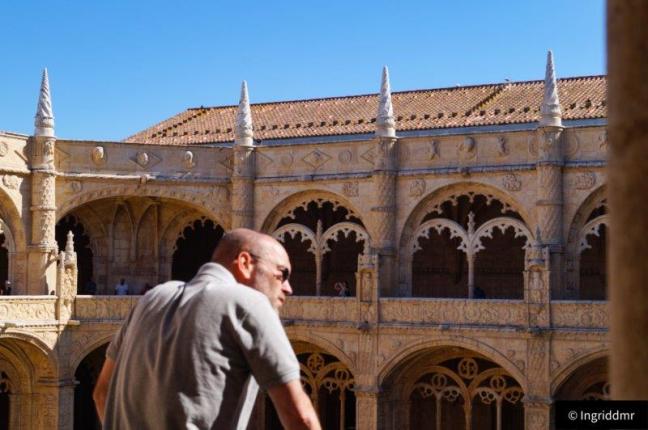
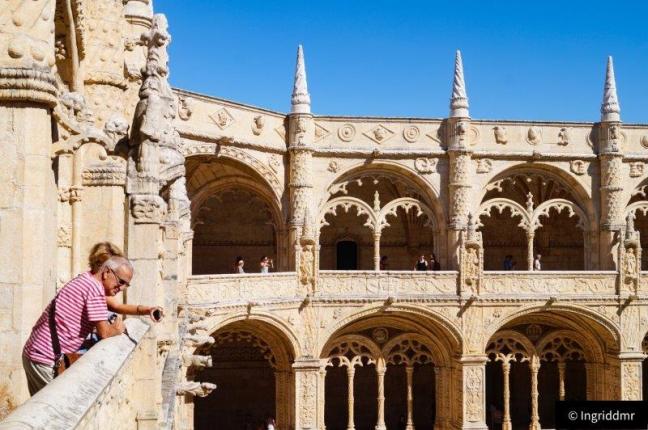
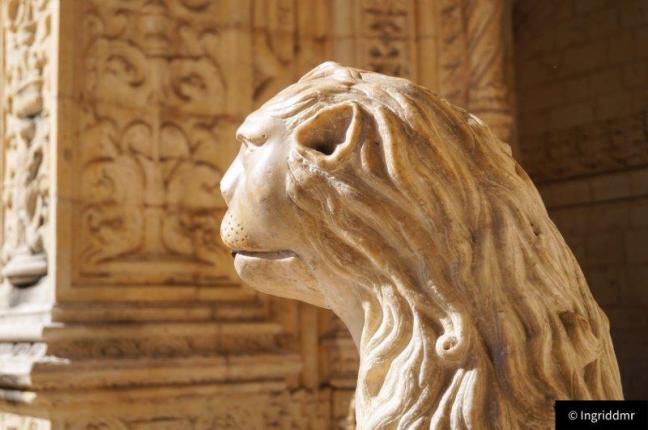
Undisputed leader when it comes to tourist queues…the Unesco-listed monastery, but so worth it! Built for the glory of God, king Manuel I and explorer Vasco da Gama this spectacular building shows an exuberant mix of styles, mixing religious, gothic and manueline/maritime elements. Construction took almost a century and it was built on the site, so the story goes, where Vasco da Gama took off on his voyage to India in 1497. Monks of the St Jerome order provided spirital guidance to all explorers following da Gama’s footsteps and adventures linking the monastery forever to Portugese maritime history…seems only right then that both king Manuel I and Vasco da Gama found their final resting place here where it all began.
Fantastic beasts and where to find them…a place for spiritual guidance and fantasy…
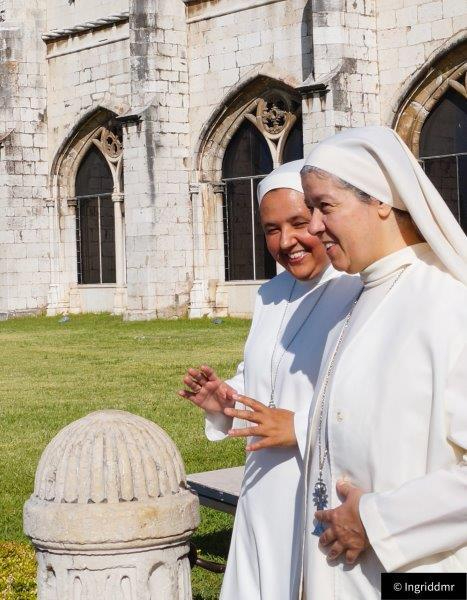
But it’s still a monastery…
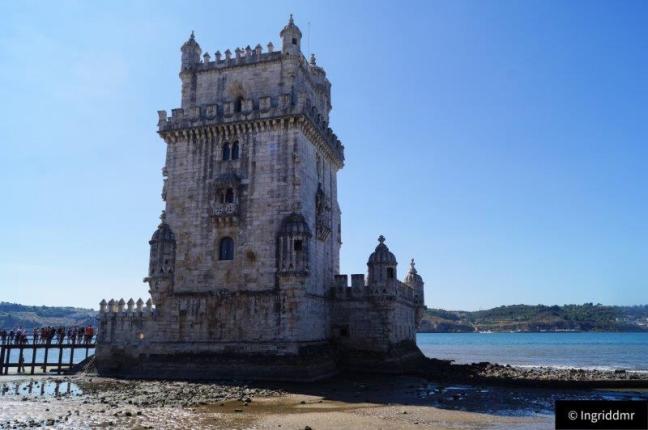
Another Unesco monument, Torre de Belém was built to keep port entrance safe and most often it was the last building of their homeland the explorers saw for many, many months or years sailing off. Originally standing in the centre of the Tejo estuary the flow changes made the fortress stand on the river bank now, making it more accessible.
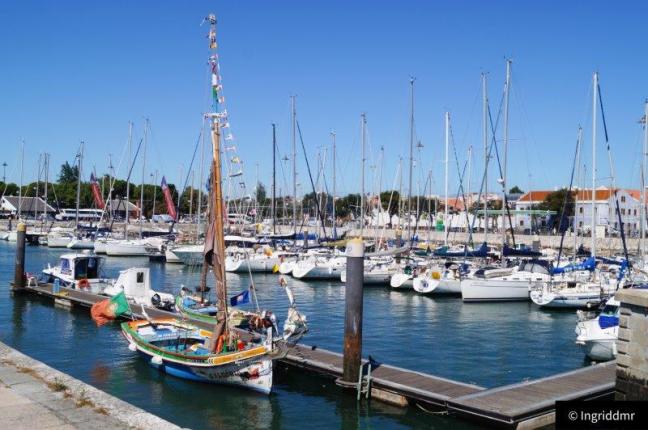
smaller sails, though still a fun and colourful adventure!
From Torre de Belém a pleasant riverbank walk leads to Padrao dos Descobrimentos…
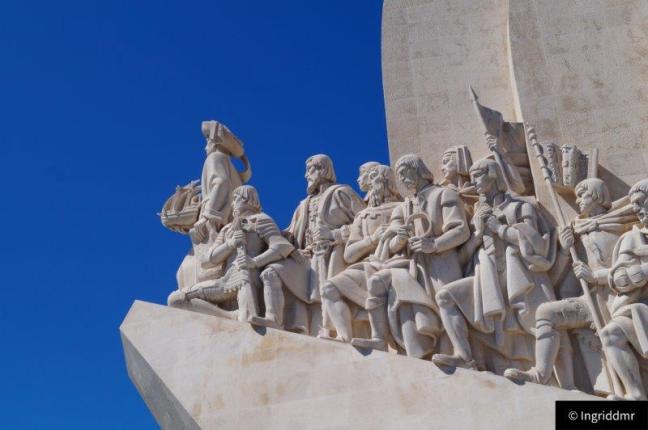
Designed as a caravel overlooking the sea with Henry the navigator in its prow, this concrete structure was built to mark the 500-year-death of said navigator. Actually it was re-built as another version made of wood and iron in 1940 already existed as part of the Portugese World Exhibition.
Both ramps together show 32 figures that have put their mark some way or another during the Age of Discovery, think cartographers, navigators, warriors, artists, etc…
Many more interesting things to see and do in Belém of course…just check tourist office for more info!
As for accessability, from city centre just take tram or train, our Airbnb Inglesinhas 5 being located close to Cais do Sodre station, train was a fast and easy option.
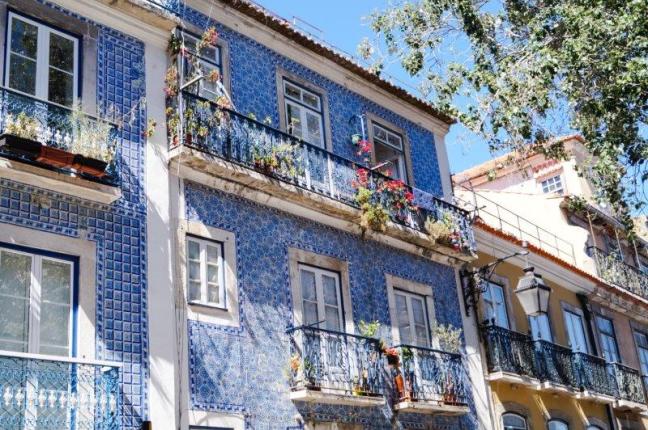
How do you you feel about citytrips? I appear to have a strange love-hate relationship with them…they both seem to energise ánd drain me, recognisable? This being said, looking back, ‘the energy-drainage’ balance was way in favour of the first feeling. We have spent five glorious days in this charismatic city though still haven’t had time to explore to the fullest if you ask me… This is a city of historic discoverers travelling the world and the seven seas bringing wealth and fame, a city having known its portion of bad fortune and catastrophies too, being rebuilt after earthquakes and risen from ashes to what it is today…an absolute shining jewel to discover! In the next posts will share some pics from our little side trips to Belém and Sintra, this one however is all about strolling through Lisbon’s city neighbourhoods, each with its own identity and taking you around some of our favourite sightseeing spots, experiences and photos. Like tiny appetisers that tickle your taste buds and make you longing for what’s next this city reveals itself step by step, (and you can take that literally being built on seven hills, do bring some comfortable shoes) and taste by taste with more goodies and jaw-dropping vistas around each corner!
Lisbon is nestled high (remember the hills) and comfortably on the Tagus river bank: city of eternal sunshine, nostalgia and renewal, the sound of fado and screeching trams…delicious fresh sardines and upcoming Michelin-star chefs, jaw-dropping architecture, fascinating tile-work and street art…a city where the day starts off with a cup of coffee and one, or more, pastéis and evening rewards you with breathtaking views…a city with an historic passion for discovery…
Are ‘you’ all set to explore?!
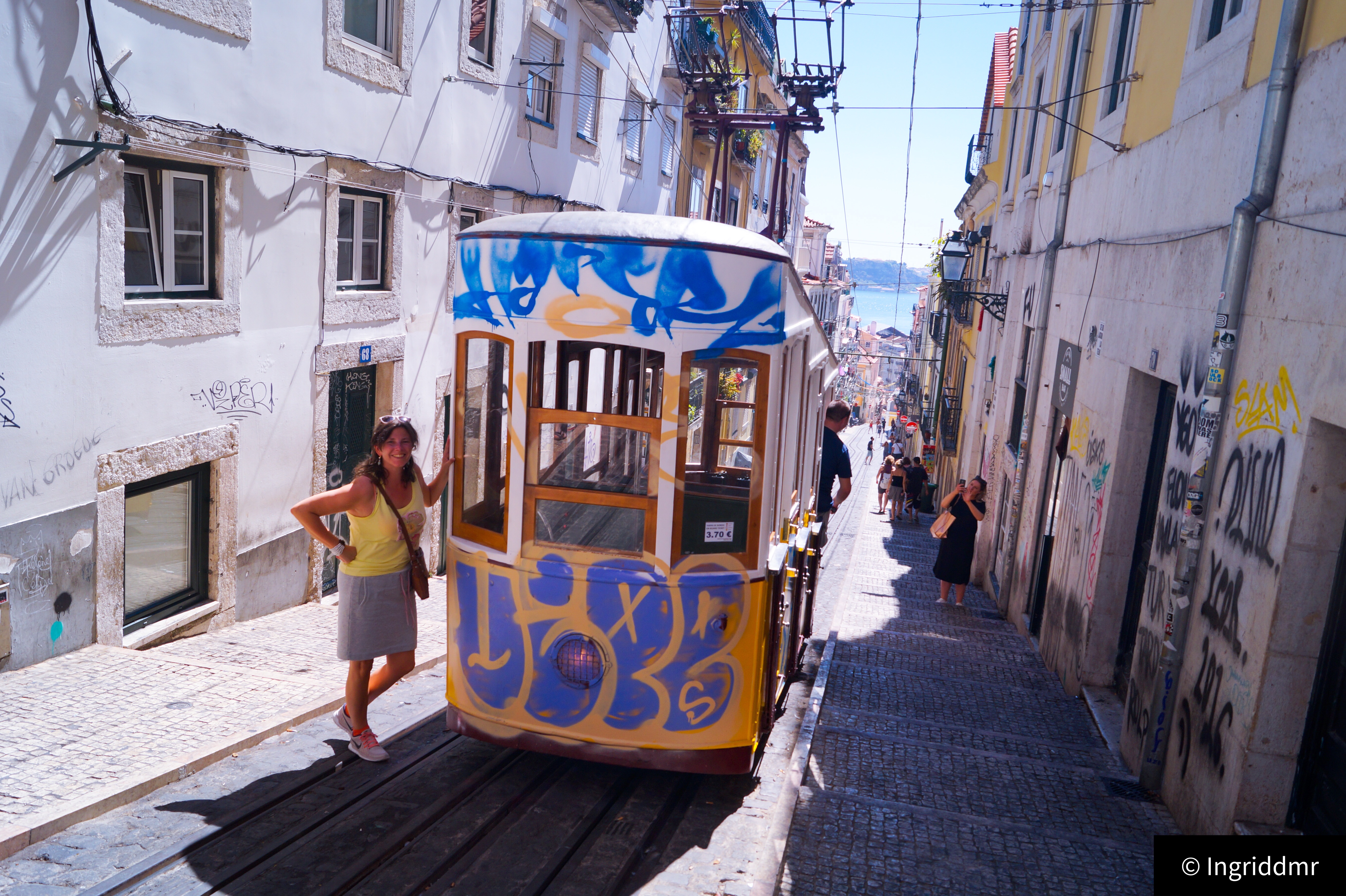
Ascensor da Bica
Covering the height levels on foot may be challenging from time to time, but doable, and if I say so, remember I am not the fittest person due to my back issues! However, if there is a quicker, more relaxing and definitely more fun way…don’t hesitate! Many options make life easier, offer you great views and your feet will thank you…Taking a ride on the historic tram 28 is a must but you can also book an eco-friendly tuktuk ride, take an ‘elevador’ or ‘ascensor’ to help you carry up those steep hills…
Elevador de Santa Justa
Rua Augusta
Arco Triunfal da Rua Augusta
View on Tagus river
welcome shadow on the Praça do Comércio
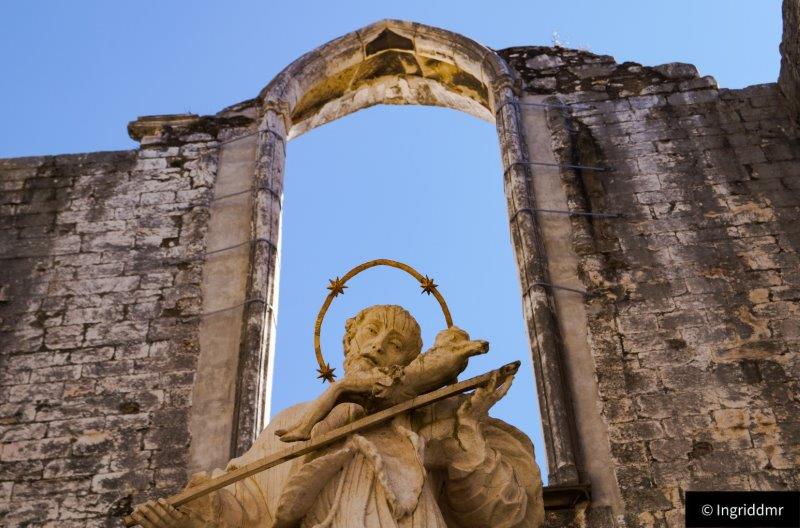
If you want to visit a place where you can still feel and witness the impact and enormous devastation of the 1775 earthquake, head to Largo do Carmo in Chiado District and visit the ruins of this convent…it has never been restored, which gives you the opportunity to walk through history in an open-air architectural historical museum.
Carmo convent
After visiting, take some time to relax on the Largo do Carmo, the lovely square just outside the convent. Plenty of shade, artists performing, surrounding shops and restaurants and a typical ‘Quiosque’ to order a drink and some little snacks…
quiosque Largo do carmo
Want to bring a fun gift for those at home? Head to ‘The Fantastic World of Portugese Sardine’ shop on Rossio Square, very funky shop with a circus theme and star role for the sardines of course which are packed in birthyear printed cans.
Embaixada, in Principe Real district is well worth a visit if you like to match shopping with design…this old Moorish designed palace houses small shops, young designers, start-up concepts and regular cultural events and exhibitions.
Meanwhile, down by the river…you can enjoy a morning walk like we did or enjoy the artists performing and all sorts of food and fashion stalls late afternoon or evening and multiple ferry routes bring you to the opposite bank where you can admire the Christo do Rei statue or enjoy a wonderful meal as sun sets on the city…
Foodwise, you won’t starve in Lisbon and lunch and dinner are quite affordable, a lot of value for little money!
Bar and restaurant Ti’ Camila
We stayed at Airbnb Inglesinhas 5 in Madragoa district which I can higly recommend, hosts Paula and Andre welcome you with a big smile and open arms and help you out with any planning or questions you still have. Some great coffeebars and restaurants nearby as well as excellent public transport connections.
We found the Lisboa card very useful and value for money, especially compared to the similar cards in other cities…if you plan on using public transport during your stay and visit some museums and attractions, do consider this…
Hope you enjoyed this little stroll around Lisbon and you’ll tag along next time when I’ll take you around Alfama district and on the trips to Belém and Sintra!
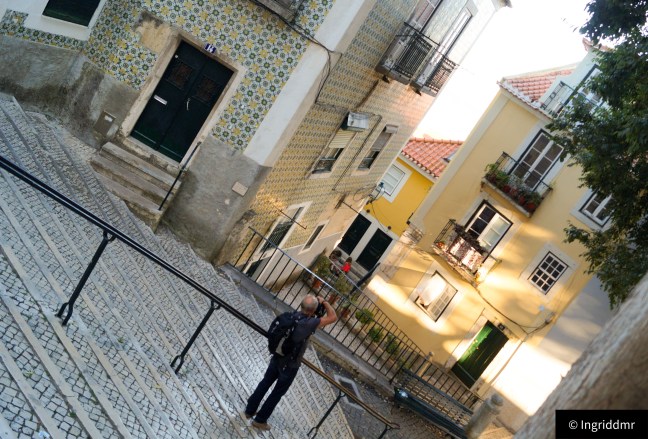
Following my previous post, Lisbon: city strolling part 1…exploring Lisbon’s neighbourhoods, we’ll slowly make our way up to its charismatic heart: the Alfama district…From the Tejo estuary just follow the steep hill all the way up to the castle or allow yourself a detour and get lost in the maze of narrow and cobbled streets, as reward: phenomenal buildings, colourful bars and restaurants, nostalgic fado sounds, street art, breathtaking vistas, the screeching tram 28 making its way and life as it is if you alllow yourself to look a bit further than the typical tourist does…
a castle needs a crown, right?!
Miradouro de Santa Luzia
true guards of their treasures at the entrance of Alfama
Sé Cathedral
View on Castle
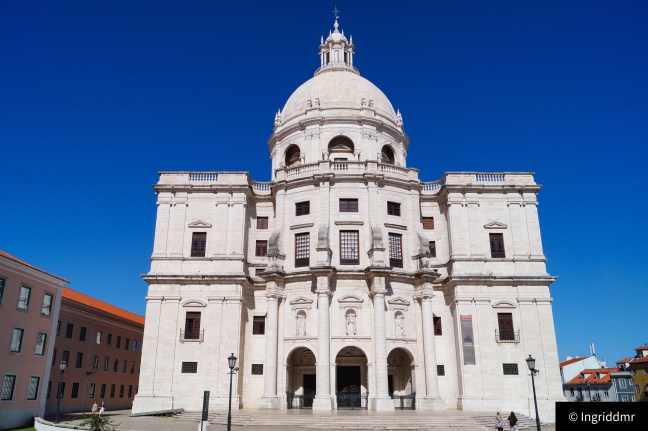
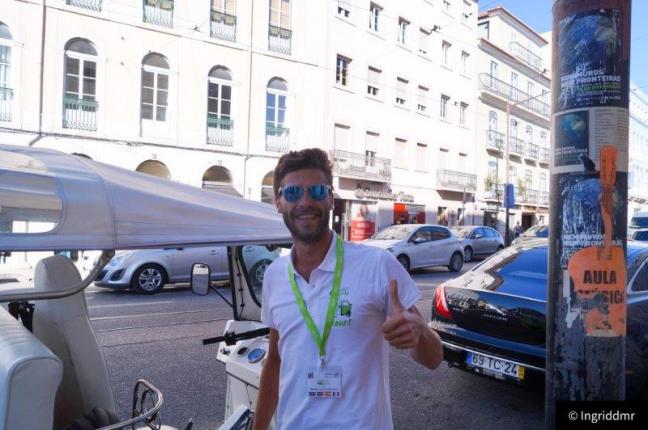
Panteao Nacionalno azulejos for a change but one of the most beautiful facades in Alfamaour excellent tuk tuk driver and guide , Ecotuktours
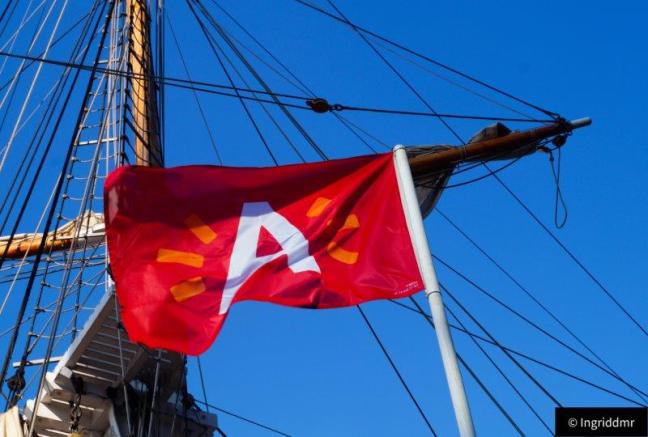
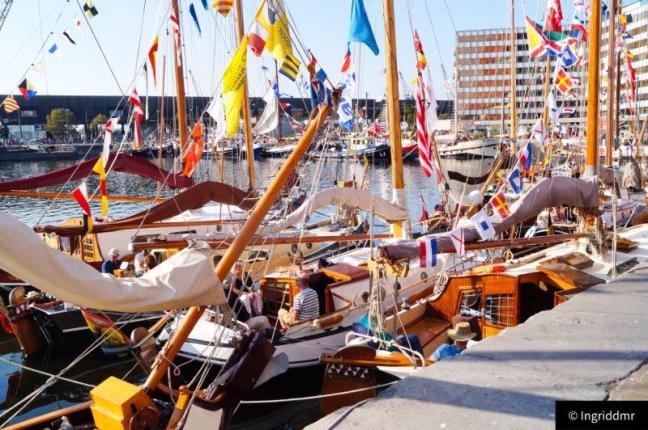
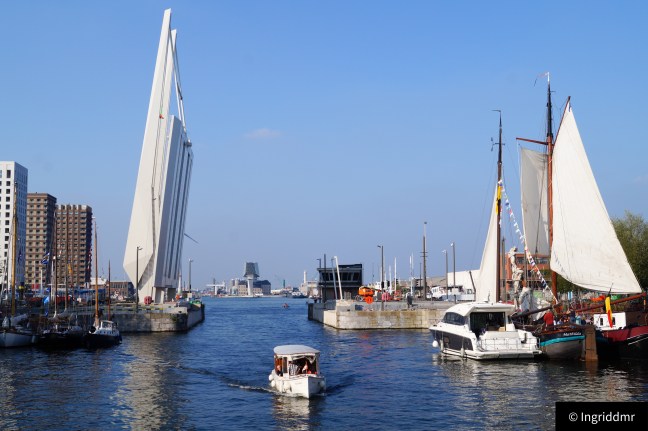
This weekend Antwerp’s hip and trendy ‘Eilandje’ neighbourhood offered thé perfect and sunny scenery for the 10th edition of the Water-rAnt festival. The city’s oldest docks welcomed around 115 historical ships and put nautical heritage and tradition in the spotlight.
Highlights: the 2km stroll along the historical vessels, some of them open to board and explore, tours with old steam tugs or other historical ships, ambiance à volonté and couleur locale, musical performances, demonstrations and no festival without food stands of course!
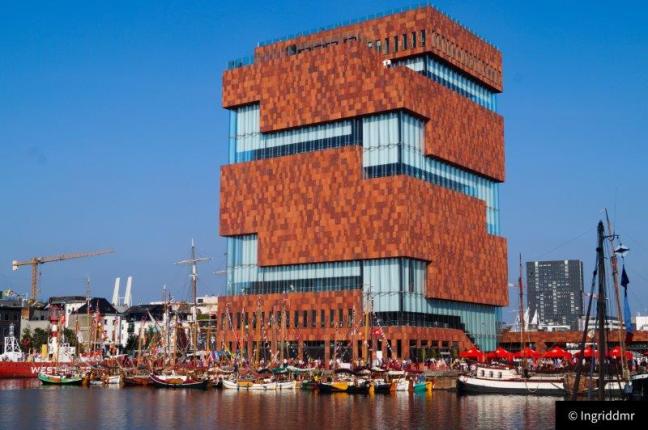
MAS museum centerpoint and in full glory and for once maybe could be re-named MASt
Inhaling life on the water makes hungry as a horse, no worries, different food stands kept every wannabe sailor satisfied, think oysters, mussels, sea food platters, smoked eel and lots of sweet treats and drinks of course.
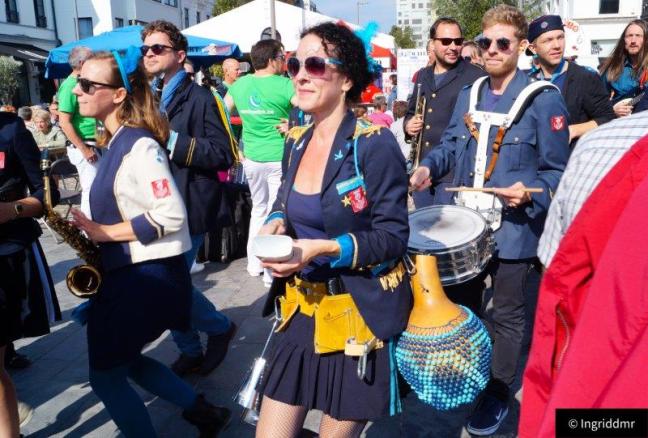
Not just an ordinary street band, contagious enthusiasm, happy vibes and funky beats are their trademark, with success, resulting in lots of cheers and smiling faces!
Draft horses and their ability to pull weight up to 3 ton each were an enormous asset in port’s history. Belgian heavy horses are among the strongest of the heavy breeds. You can still spot these power beauties when making a city tour with the horse-drawn streetcar. Keep an eye on them and make sure they are well taken care of and get to drink regularly. The way our driver spoke about his beauties showed his passion and love for them.
See you on the other side!
The new ‘Londenbrug’ bridge opens up to welcome sailing boats and yachts into the inner docks and offers open view on Port Authority house, one of the last completed designs by Zaha Hadid.
Sea scouting in the city? Of course!
sailing catMiniature ship buiding craftmanship
Did I awaken some nautical vibes with you? See you next year then or check the eventspage below to find future interesting festivities!




































































 The Back Road Chronicles